
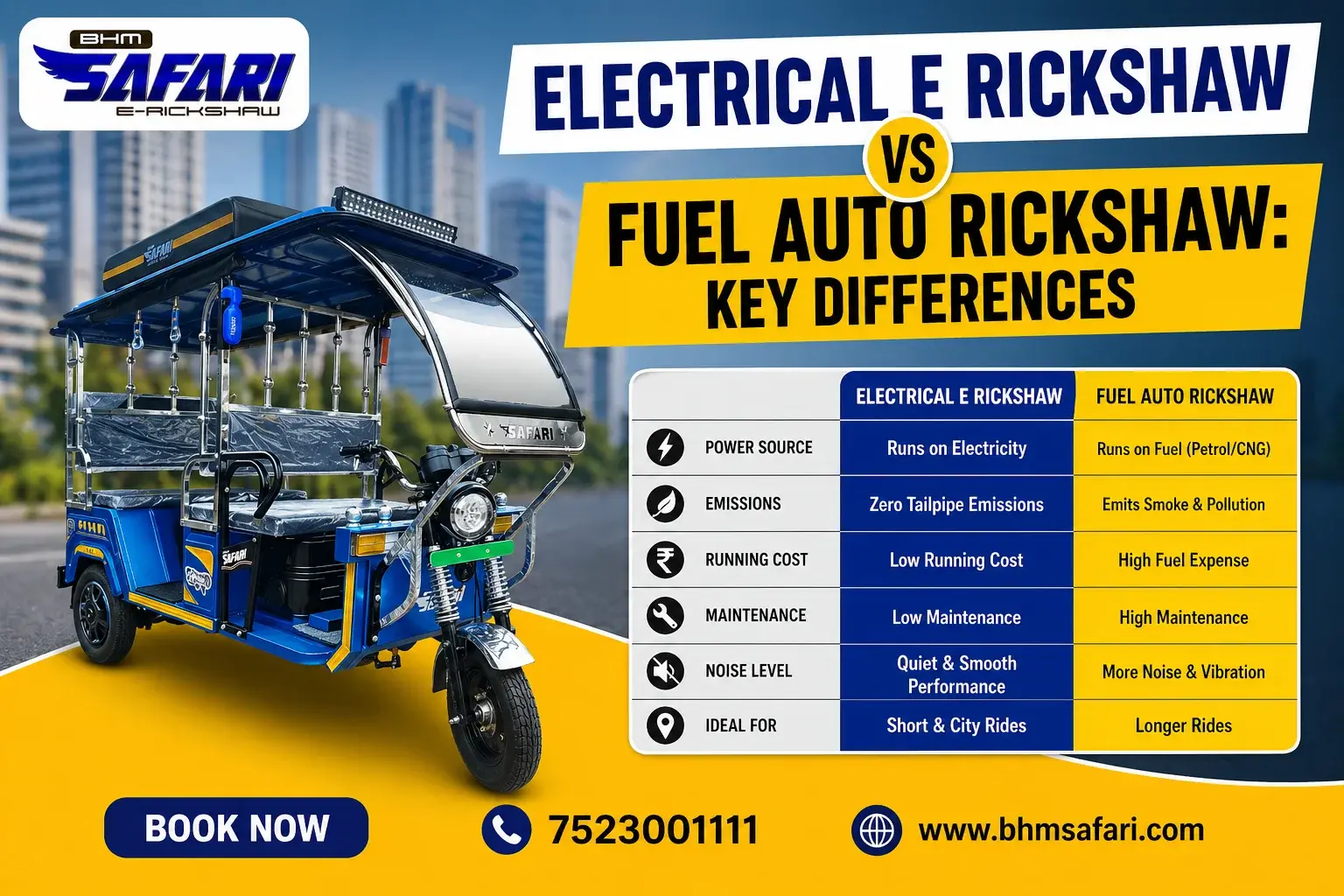
Urban mobility in India is rapidly evolving, and the shift toward electric vehicles is clearly visible on the streets. Among the most noticeable changes is the growing demand for electric rickshaws. Buyers, fleet owners, and drivers are increasingly comparing options offered by electric E Rickshaw manufacturers with traditional fuel powered auto rickshaws to make better investment decisions. However, there is still an ongoing confusion among several drivers and fleet owners regarding the same. In this blog, we are sharing some of the important differences between the two to help you understand which one is better.
Cost efficiency and daily savings
One of the most significant differences lies in operating cost. Electric e rickshaws run on battery power, which is far more economical than petrol or diesel. Daily savings add up quickly, especially for drivers who operate throughout the day. Fuel auto rickshaws, on the other hand, are subject to fluctuating fuel prices, which directly impact earnings. Lower maintenance costs also give electric models an advantage, as they have fewer moving parts and reduced wear and tear.
Environmental impact and sustainability
Clean energy is no longer just a trend but a necessity. Electric e rickshaws produce zero tailpipe emissions, making them a much better choice for crowded cities struggling with pollution. Fuel auto rickshaws emit harmful gases that contribute to poor air quality. Government policies and public awareness are pushing the adoption of greener alternatives, encouraging businesses to work closely with Electric E Rickshaw Manufacturers for sustainable transport solutions.
Performance and driving experience
Electric e rickshaws offer a smooth and noise free ride, which improves both driver comfort and passenger experience. Instant torque ensures better pickup in city traffic conditions. Fuel powered auto rickshaws may deliver higher speed in some cases, but they often produce vibrations and engine noise that reduce ride comfort over time. For short distance urban travel, electric options are proving to be more practical and user friendly.
Maintenance and durability
Servicing requirements differ greatly between the two. Electric e rickshaws require minimal maintenance due to simpler mechanical systems. Regular battery checks and basic upkeep are usually sufficient. Fuel auto rickshaws involve engine maintenance, oil changes, and frequent servicing, which increases downtime and expenses. Over the long term, electric vehicles offer better reliability and cost control.
Government support and market growth
Policies promoting electric mobility have created a strong push for electric rickshaws in India. Subsidies, incentives, and easier financing options are making electric vehicles more accessible. This has strengthened the position of electric E Rickshaw manufacturers in the market, allowing them to innovate and deliver improved models that meet modern transportation needs. Fuel vehicles, while still in use, are gradually losing preference in urban areas.
Which one should you choose?
Decision making depends on usage, budget, and long term goals. Electric e rickshaws are ideal for city operations where cost savings and sustainability matter most. Fuel auto rickshaws may still appeal to those operating in areas with limited charging infrastructure, but their long term viability is declining.
Conclusion
Electric e rickshaws clearly stand ahead in terms of cost efficiency, environmental benefits, and ease of use. Businesses and drivers looking for future ready solutions are looking for trusted electric E Rickshaw manufacturers to get high quality E rickshaws. Being one of the leading brands ourselves, we at BHM Safari are successfully shaping this transition by delivering quality electric vehicles that meet modern mobility needs.