
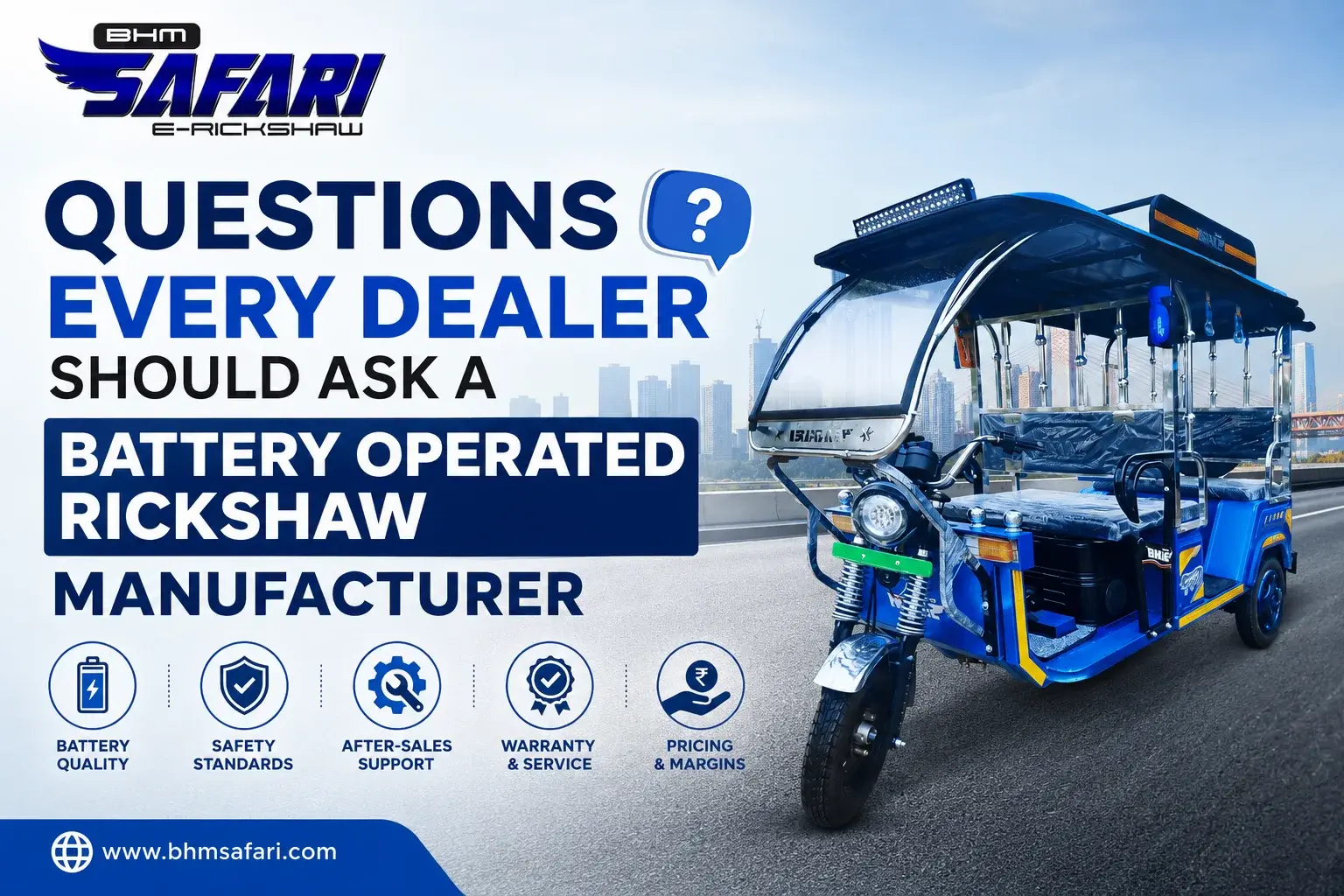
The battery-operated rickshaw market in India is at its peak. The market is constantly facing increase in the demand for eco-friendly and cost-effective transportation solutions. E Rickshaw dealers are also looking for top battery operated rickshaw manufacturers who can help them offer long-term business success. While many manufacturers offer attractive pricing and promises, but considering them without asking the right questions is not helpful.
If you are a dealer planning to work with a reliable manufacturer, it is advised to consider the questions we have shared in this blog to find a trusted partner.
What is the quality of the vehicle and its components?
The first question every dealer should ask is about vehicle quality. A battery-operated rickshaw is made up of several critical components, including the chassis, motor, controller, suspension, brakes, and battery system. Dealers must ask the manufacturer about:
- What materials are used in the chassis?
- Which motor and controller brands are installed?
- What testing procedures are followed before delivery?
Does the manufacturer offer product certifications?
Certifications are must to consider when investing in battery operated rickshaws. That is why, we always recommend considering manufacturers and vehicle that meet industry and regulatory standards. Dealers should verify whether the manufacturer follows the latest government guidelines and quality requirements. Ask manufacturers if they have all these certifications:
- ICAT approval
- COP (Conformity of Production)
- AIS (Automotive Industry Standards)
- ISO CertificationWhat warranty and after-sales support are available?
After-sales support is essential in customer retention and for dealers it is a crucial factor so that they can maintain their business growth. Before choosing battery operated rickshaw manufacturers, one must ask about:
- Warranty coverage
- Availability of spare parts
- Technical support services
- Service network coverage
What is the battery compatibility and performance?
Battery performance directly affects vehicle range and customer satisfaction. And if the battery won’t perform well, dealers may face constant complaints and negative reviews as well. It is advised to ask these questions:
- Which battery types are supported?
- What is the average driving range?
- How long does charging take?
- Are lithium-ion options available?
What is the production capacity?
A growing dealership requires a consistent vehicle supply. So, one must always ask the manufacturer about their production capacity and delivery timelines. Some of the questions to ask are:
- How many vehicles can be supplied monthly?
- What is the average order fulfillment time?
- Can bulk orders be handled efficiently?
Are spare parts easily available?
One of the biggest concerns for e-rickshaw owners is spare part availability. So before taking dealership, E-Rickshaw dealers must ensure that the manufacturer maintains adequate stock of essential components. Quick access to spare parts minimizes vehicle downtime and improves customer confidence in the brand.
What is the manufacturer’s market reputation?
Last but not the least, before finalizing a dealership, one must research about the manufacturer’s reputation in the industry. Dealers must look for customer reviews, dealer feedback, years of experience, and successful market presence. A well-established manufacturer is more likely to provide reliable products and long-term business support.
Conclusion
One must understand that when investing in E-rickshaw dealership, it is not only the cost that matters, but evaluating other factors are also essential. So do ask battery operated rickshaw manufacturers about e-rickshaw quality, certifications, warranty support, battery performance, production capacity, spare parts availability, and overall market reputation. Asking these important questions can help you build a successful dealership and provide better value to your customers. Always choose trusted manufacturers like BHM Safari who can give your business the confidence, reliability, and support needed to grow in the rapidly expanding electric mobility sector.